The Role of Inductive Sensors Within Industrial Automation
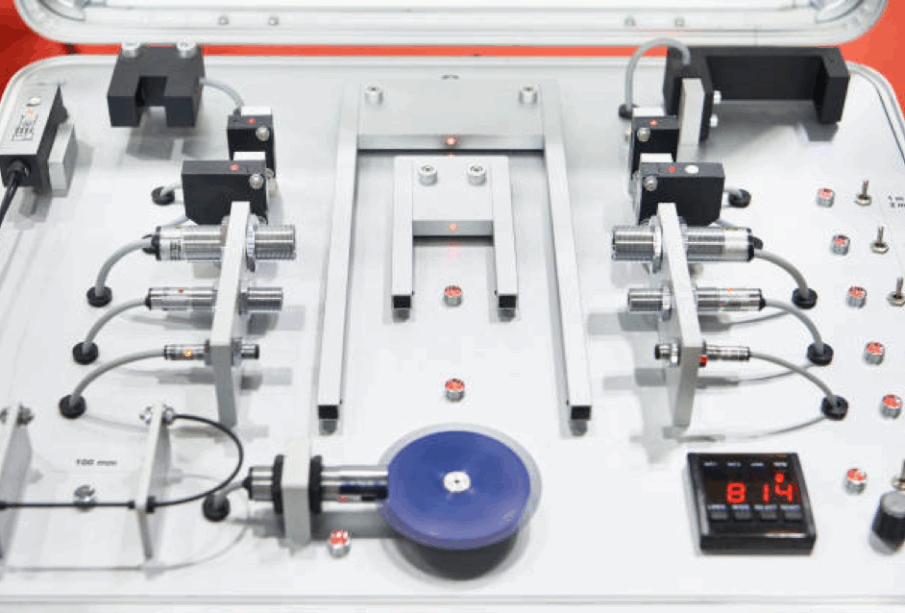
The use of inductive sensors has drastically improved industrial automation technology in recent years. They offer the unique advantage of non-contact detection of objects, especially metallic ones, which makes them incredibly useful in harsh environments which require endurance, speed, and dependability. Inductive sensors make non-contact and non-wear accurate positioning, counting of objects, and motion control in assembly lines, robotics, and process control.
The article aims to address the working principles, major components, common uses, and other relevant and noteworthy details of inductive sensors throughout the B2B ecosystem, especially focusing on engineers, automation professionals, and system integrators. For precision and reliability in detection technologies, Omchele offers https://www.omchele.com/ru/proximity-sensors/inductive-proximity-sensors/ of inductive proximity sensors specifically designed for industrial uses.
The Functionality of Inductive Sensors
Inductive sensors operate on the electromagnetic induction principle. For the sensing face, a coil is positioned and an oscillating magnetic field is generated. A metallic object induces eddy currents in the material, which in turn oscillate. The amount of oscillation is proportional to the eddy currents induced. The sensor’s internal circuitry can detect the change, and therefore increases and reduces control depending on the type of sensor output signal.
Key Characteristics
- Non-contact operation: Provides low wear and a long lifespan
- Metal-only detection: Focuses on ferrous and non ferrous metals only
- Fast response time: Allows for quick switching and counting
- High repeatability: Excellent for precision machine feedback and alignment systems
Thanks to their inductive construction, these sensors are heavily resistant to dust, oil, water, and vibrations, making them ideal for rugged industrial settings.
Applications spanning B2B industries
With their reliability and rugged design, these sensors are used across numerous B2B industrial sectors. Below are some notable applications.
Factory Automation
In industrial manufacturing plants, inductive sensors are used for:
- Sensing: Detecting or confirming the presence of metallic parts
- Aligning: Ensuring machine components are properly aligned for operation
- Counting: Monitoring the flow of components on a production line for business process management
Their small size facilitates their placement on conveyor systems, robotic arms, and CNC machines.
Automotive Industry
In automotive manufacturing, inductive sensors are used to monitor the positioning of engine parts, control sequence of welding processes, and confirm fastening of parts. Moreover, these sensors are used on robots where accurate detection of metal parts is essential.
Food & Beverage Processing
Inductive sensors are prominently featured in automated, especially in the more rugged automated cleaning industrial environments where sealed sensors are exposed to washdowns and temperature extremes.
Packaging and Logistics
Inductive sensors track the movement of metal trays. They can also confirm completion of package closure for metal parts and function with automated gates and sorting equipment in distribution centers.
Renewable Energy and Infrastructure
Inductive sensors are used in the manufacturing of wind turbines and solar panels for aligning, fault detection, and maintenance signaling of parts which are vital for reducing downtime and improving reliable output.
Inductive Sensors Modification for Industry Use
B2B professionals looking for industrial solutions with inductive sensors are advised to pay attention to the following factors to ensure effectiveness and seamless integration.
Sensing Distance
Inductive sensors have a short sensing distance of 1 mm to 40 mm. The range is determined by the sensor’s dimensions and the metal to be detected. Non-ferrous metals are detected at close range compared to ferrous metals. Selection of detection range must match installation space to sensor needs.
Housing Material and Protection Rating
Selecting the proper housing for the sensor depends upon the working environment. Examples include:
- Stainless steel – Corrosion and strain resilient.
- Brass with a nickel plating – Typical for the general-purpose industry.
- Plastics – Light, and can fit into tighter structures.
If the sensor will come into contact with dust, water, or even chemicals, ensure its protection rating is IP67 or higher.
Mounting Type
There are two main types of mounting:
- Flush (shielded) – Detection is limited to the sides of the sensor and is installed level with the mounting surface.
- Non-flush (unshielded) – Offers longer focal ranges. Detection is in front of the mounting surface and extends beyond it.
Different mounting types also change the sensor’s field shape and detection capability.
Output Configuration
Inductive sensors come with different output types, including:
- PNP/NPN switching
- Analog output for continuous sensing.
- Two-wire or three-wire configurations per the system’s needs.
Selecting the right output type ensures seamless integration with PLCs, controllers, or relay systems.
Operating Temperature and Environmental Resistance
In extreme environments, the sensor has to endure temperature extremes, mechanical shocks, and electromagnetic interference. For critical systems, always look into a device’s operating ranges and the electromagnetic interference (EMI) shielding.
Integration Best Practices for Industrial Systems
Proper installation of inductive sensors within a control system demands careful consideration of the wiring diagram, location of the sensors, and the overall maintenance strategy. Here are some recommended practices to facilitate and ensure seamless implementation:
Reduce Electromagnetic Interference
While inductive sensors are quite rugged, they are vulnerable to high-frequency signaling originating from nearby power apparatus or adjacent sensors. Shielded cabling and proper spacing help avoid signal interference.
Employ Indicator LEDs
Sensors that incorporate indicator LEDs allow visual confirmation of detection states. This improves the ease of installation and reduces the time and effort needed during the troubleshooting process.
Plan for Maintenance Access and Replace Systems
While maintenance on sensors is infrequent, it is important to allow for simple access during the installation and removal and re-installation stages. Designing the system with modular mounts can help limit the time during the replacement process.
Automatic Maintenance
Set specific time intervals for inspection sessions that include checking the sensors for debris and improperly set alignment. In the presence of dust or oily conditions, cleaning the dust from the sensing face significantly improves detection.
Omchele’s collection of inductive sensors for industrial systems are rugged and offer high precision. Their diverse form factors and protection ratings enable use in various applications.
The Upcoming Trends of Inductive Sensor Technology
Inductive sensors are also evolving as industrial automation systems implement new upgrades. Some of the new updates and trends are as follows:
Nano Technology and Embedded Systems
Ultra small inductive sensors are gaining popularity as the automation market is being streamlined with new compact tools and collaborative robot systems (cobots).These microsensors are capable of full functioning detection and can be as small as the tip of a pencil providing the option for tight-space integration.
Inductive Sensors as Smart Sensors and IIoTs
Inductive sensors with communication interfaces such as IO-Link are at the forefront of new technology. These smart sensors are capable of detection and can transmit information including temperature, operational hours, and fault signals to centralized monitoring systems.
Greater Scale of Customization
To meet various specialized industrial needs, manufacturing companies are altering housing shapes, lengths of cables, and outputs making them customizable. Hence, B2B companies can better adapt to their operational needs and therefore tailor their systems.
New Advanced Materials and Coatings
The addition of new sensor housing materials have advanced the coatings to be more resistant to weld spatter, chemical corrosion, and extreme heat. This is very useful in chemical processing plants or in harsh welding environments.
Conclusion
Inductive sensors are crucial devices for industrial sensing technology. They provide accurate and maintenance-free detection of metallic objects. Their non-contact operation and durability make them ideal for automotive applications and for use in logistics and renewable energy sectors.
For B2B enterprises, selection of the right sensor solution entails a trade-off between sensing range, environmental resistance, output configuration, and ease of integration. Inductive sensors are applied in machines and systems where a high level of operational accuracy and safety is required. As industrial operations become more intelligent and interconnected, the use of inductive sensors in industrial applications will continue to grow.
Omchele offers sensor technology and industrial-grade automatic systems tailored to performance criteria, fulfilling expectations for precision and reliability for systems upgrades as well as for new automation lines.